
New! Sign-up using Facebook Connect and get your tax extension for FREE! Learn More.
How It Works: Filing a Personal Tax Extension
You’re only a few minutes away from getting a 6-month tax extension. Here’s how to extend your IRS income tax deadline using FileLater to electronically file Form 4868, which extends the filing deadline to October 15 for forms 1040, 1040A, or 1040EZ.
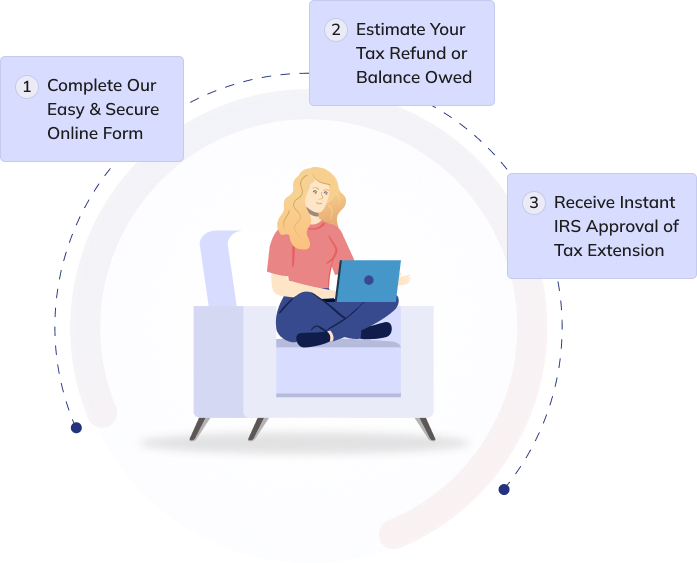
Step 1: Provide the personal data the IRS requires for you to file a tax extension. This includes your name, address, social security number, and the same information for your spouse if you are married and filing jointly. W-2’s, 1099s, prior year tax returns, and all of those complicated tax forms are not required! All of your information is kept secure and not shared with anyone but the IRS, period.
Step 2: Estimate if you are going to get a tax refund, or expect to owe a tax balance. If this sounds complicated, don’t worry… we make it easy. You can use our easy tax calculator to estimate your situation. Or, many customers simply assume a similar tax situation to last year. If you expect to owe, and want to make a tax payment to avoid potential IRS interest and late payment penalties, we can help you make that payment directly to the IRS via Electronic Funds Withdrawal from your bank (EFT) – it’s your choice.
Step 3: Once you submit your tax extension with FileLater, we will electronically form 4868 to the IRS for approval. FileLater is an authorized IRS e-file provider which means your data, and our transmission to the IRS, is safe…so you have nothing to worry about.
That’s all it takes.In a couple of days when we hear back from the IRS, we'll send you an email notifying you that your extension was approved by the IRS. If for any reason your tax extension is rejected, we’ll tell you why, and you can resubmit for free after making any changes. Almost all rejections are caused by a name and social security number not matching IRS records (caused by misspellings, typos, change of name, etc).As long as you submit your information accurately and on time, it should be approved - that’s why the IRS calls it an “Automatic Extension".